
Image by rawpixel.com on Magnific
When budgets are tight, how a company manages its talent decides whether it comes out of the year stronger or just smaller.
A familiar memo is landing on a lot of desks right now, asking leaders to find savings in people costs. Business unit heads are being handed a number and a deadline, and with few other options within reach, headcount quickly becomes the lever they pull.
It is a common story this year. Even with layoffs running below 2025's pace, US employers announced more than 617,000 job cuts through October 2026, with market and economic conditions the most-cited reason.
When cuts happen without a plan, the people most likely to walk out are often the ones a unit can least afford to lose. The unit hits its cost target and ends up smaller, but not exactly stronger.
Why cutting without a plan backfires
A headcount cut is supposed to remove a known number of people. In practice, it also sets off departures nobody planned for.
Who leaves matters even more than how many.
A study in the Academy of Management Journal followed turnover at a large retailer with access to performance records. It found that layoff announcements push up quitting among survivors almost immediately, and among both high and low performers. Once high performers begin to leave, the effect compounds. After one high performer quits, quit rates among other high performers climbed about 6% a month for three months, while low performers became less likely to leave.
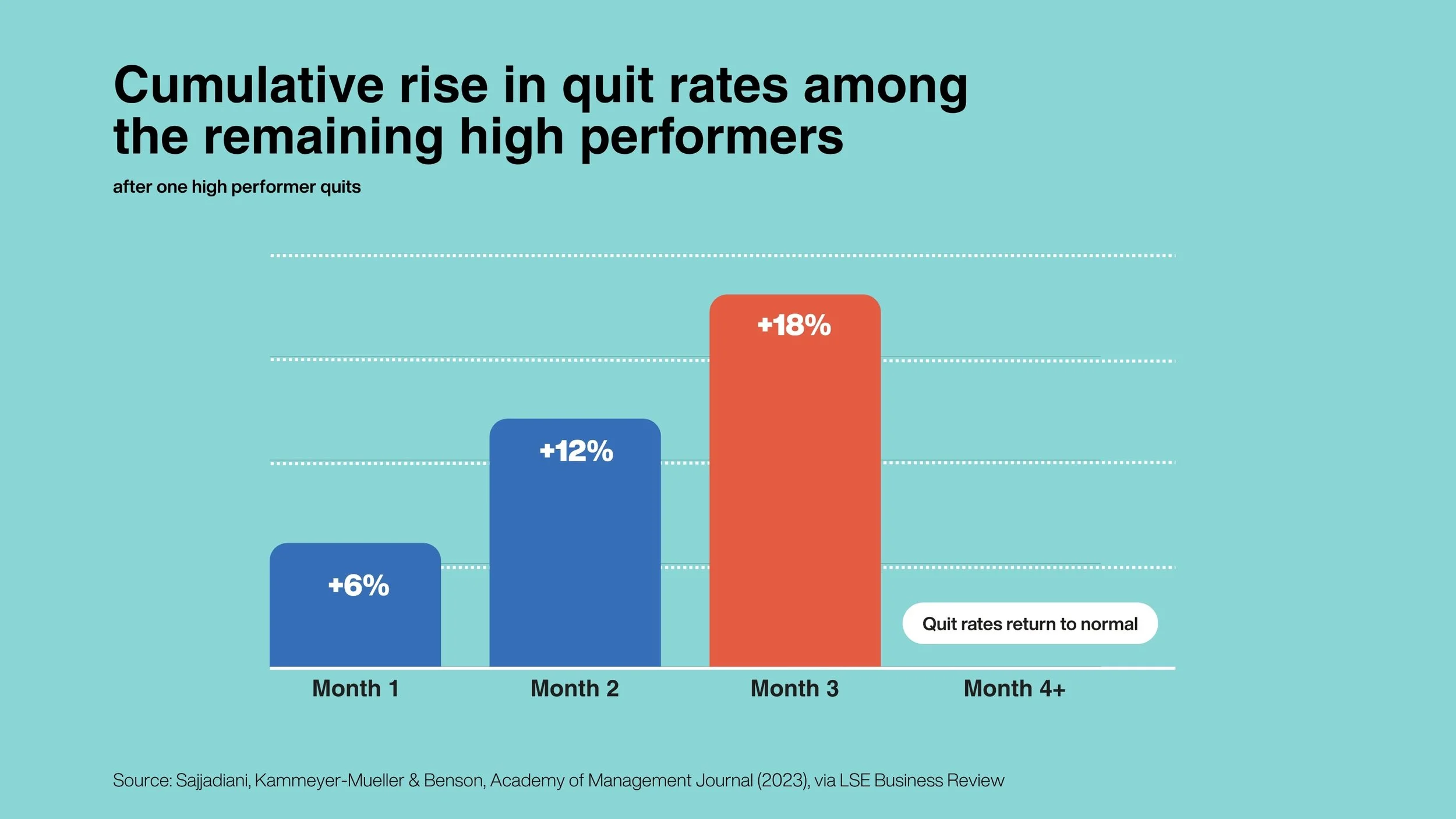
More recent data tells a similar story. In a late-2025 Careerminds survey of 500 US HR leaders, 40% said layoffs at their organization had led to more voluntary turnover, and that is the trap. A unit's strongest people have the most options, so they are the first to act on uncertainty, while those with fewer options tend to stay. Without a plan, a cost-cutting round can quietly shift the whole unit toward lower performance, just as its leaders are counting on it to do more with less.
The cost target gets met, but the capability the unit needs for what comes next walks out the door with it.
What keeps people when pay can't
Here is the bind for a business unit head. They need to hold on to their best people, and the budget has just taken away the tools they would normally use. Raises are frozen, bonus pools are thin and promotions are on hold because the roles above are being consolidated.
The good news is that pay was never the strongest reason people stay or go. When MIT Sloan researchers studied attrition at large US employers during the Great Resignation, job insecurity and reorganization were 3.5 times more powerful than compensation in predicting which companies lost people faster than their industry peers.
Handling uncertainty well comes down to the daily experience of work. People stay when they know what is happening, have the support they need and believe their leaders are being honest with them. None of that requires a budget line. All of it depends on how leaders run the change.
Clarity comes first. People are far more likely to stay through a hard year when they understand why decisions are being made and where they fit in what comes next. Silence does the opposite. When high performers are let go without a clear reason, the high performers who remain read it as a warning and start looking.
Growth comes next, and it costs nothing. The same MIT Sloan research found that lateral career opportunities did more for retention than a pay raise. A year of change is full of problems worth owning, and handing them to high performers gives those people a reason to stay that no budget line can match.
Protect first, then give critical people a reason to stay
The business unit heads who come out of a tight year stronger do two things differently. Before any cuts are made, they decide which people and skills will keep the unit strong, and they protect them. Then they make sure those people know it and have a reason to stay.
Most cost cutting begins with a number from finance and works backward to roles, layers and locations, and whatever survives is what gets kept. That is how a unit loses the one engineer who understands a critical legacy system, or the account lead who holds three key client relationships, without anyone ever deciding it should.
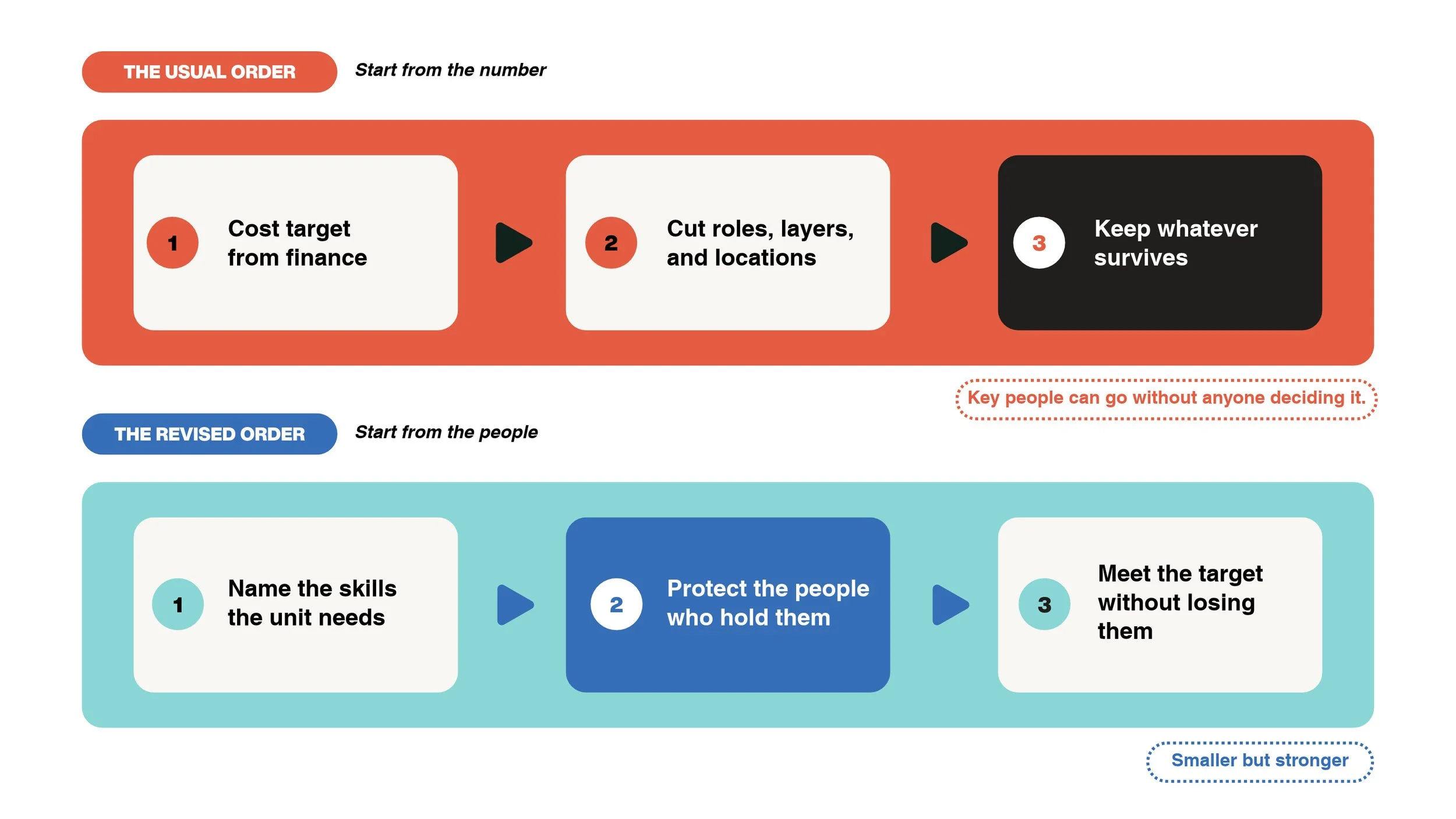
The better starting point is strategy. Which capabilities will the unit depend on over the next few years? Who holds them today, by name rather than by role? Which of those people have strong outside markets and will move at the first sign of uncertainty? And what would losing them really cost, once rehiring, ramp-up, lost clients and the departures that follow are counted? The answers should shape the cuts, not the other way around. They also show where to spend the attention, flexibility and development opportunities that leaders can still offer.
Protection only works if the people being protected feel it. Critical people should hear directly and early that the unit is counting on them and why. They should get the reasoning behind the cuts, including the options weighed and why the final choices landed where they did. People can absorb bad news; what drives them away is spin, silence and the sense of being handled rather than told. A leader who says "I don't know yet" keeps more trust than one who promises stability and then cannot deliver it.
The work itself also has to change. Unless leaders decide what work stops and how much the team can realistically take on, people simply absorb the extra load until they burn out or leave.
Those same choices create room for growth: handing a high performer a meaningful project, like leading a new initiative or redesigning a key workflow, costs the budget nothing.

The pressure on budgets is not going away, and some cuts cannot be avoided. What can be avoided is the quiet loss that follows a careless round. None of it shows up in the savings. All of them show up later through the work that slips, the clients that drift or a business unit that is weaker than its headcount suggests.
The leaders who come out of a tight year stronger cut with intent. They decide who the unit cannot afford to lose before anyone opens a spreadsheet, and they give those people a reason to stay.
When budgets recover, those leaders will not be rebuilding. They will be ready to bring things to the next level.
Key Takeaways:
Unplanned cuts drive out the people a unit most needs.
When pay can't keep people, clarity and growth can.
Protect critical talent first, then give those people a reason to stay.